The Story of Flight
20 milestones, in order
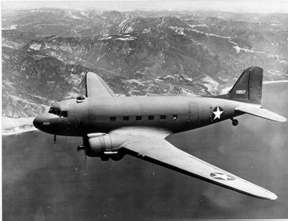
The Army Air Forces Air Transport Command
Over the course of World War II the United States Army Air Forces built up what amounted to the largest airline in the world.
Germany Attacks Poland: Blitzkrieg
On September 1, 1939, Germany invaded Poland, an act that began World War II in Europe.
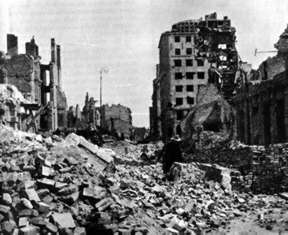
Blitzkrieg in the German Attack on the West
In May 1940 Germany unleashed its attack on the West, employing the fast-moving combined-arms tactics that became known as Blitzkrieg.
The Battle of Britain
After the fall of France, the Luftwaffe quickly assembled a large force to attack Great Britain.
Japanese Air Attack on Pearl Harbor
On the morning of December 7, 1941, Japanese carrier aircraft struck the United States Pacific Fleet anchored at Pearl Harbor, Hawaii.
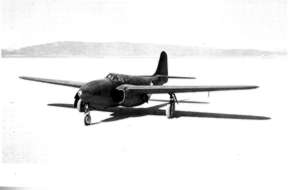
Bell XP-59A Airacomet: First American Jet
On October 1, 1942, the Bell XP-59A Airacomet made its first official flight, becoming the first jet-powered aircraft built in the Unit
RAF Launches the First 1,000-Bomber Raid
On the night of May 30-31, 1942, Britain's Royal Air Force mounted Operation Millennium, the first thousand-bomber raid in history, aga
The Battle of Midway
The Japanese planned to attack the Island of Midway, expanding their hold on the Central Pacific.
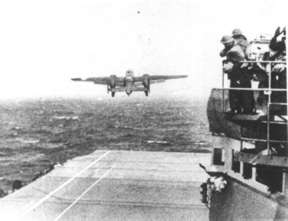
The Doolittle Raid on Tokyo
On April 18, 1942, the United States launched its first air attack on the Japanese home islands, a daring operation led by Lieutenant C
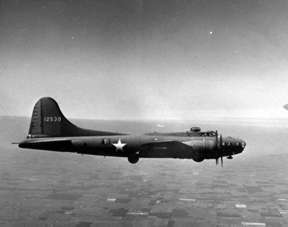
First U.S. Daylight Bombing Raids on Germany
On January 27, 1943, American B-17 Flying Fortress bombers of the Eighth Air Force carried out the first U.S.
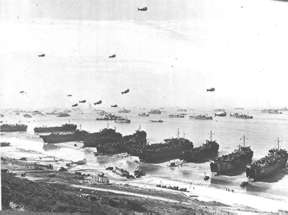
Allied Air Power on D-Day
During the Normandy invasion of June 6, 1944, the Allies committed an enormous aerial armada in support of the landings.
B-29 Raids on Japan
On June 15th, 47 B-29 bombers based in China bombed the Imperial Iron and Stell Works at Yawata, Japan.
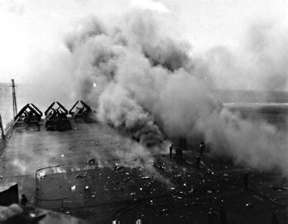
Japanese Kamikaze Attacks Begin
By late 1944, with the war turning decisively against them and the United States holding overwhelming air and naval superiority in the
B-29 Drops the Atomic Bomb on Japan
On August 6, 1945, a Boeing B-29 Superfortress named Enola Gay, piloted by Colonel Paul Tibbets, dropped the first atomic bomb used in
The Strategic Bombing Campaign Against Germany
Over the course of the Second World War, the Allied strategic bombing campaign against Germany grew into one of the largest aerial effo
Boeing XC-97 Sets a Speed Record
In 1945 the Boeing XC-97, an experimental military transport derived from the B-29 Superfortress, set a notable transcontinental speed
Boeing XC-97 Sets a Transcontinental Speed Record
In 1945 the Boeing XC-97 prototype set a notable transcontinental speed record, flying from Seattle, Washington, to Washington, D.C.
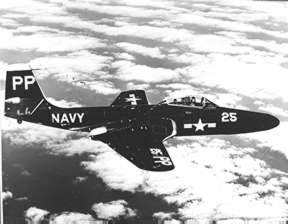
McDonnell FH-1 Phantom: First Carrier-Based Jet
The McDonnell FH-1 Phantom was the first jet aircraft developed for and operated from a U.S.
First Nonstop Around-the-World Flight
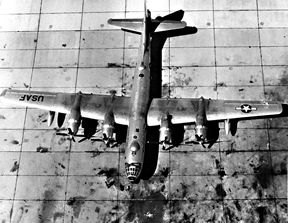
In 1949 a United States Air Force Boeing B-50 Superfortress named Lucky Lady II completed the first nonstop flight around the world.
Lockheed P-80 Shooting Star
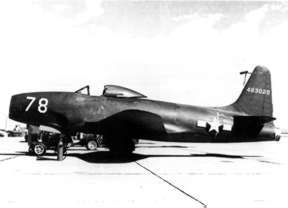
The Lockheed P-80 Shooting Star was the first jet fighter to enter operational service with the United States Army Air Forces.