The Doolittle Raid on Tokyo
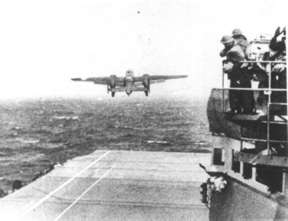
On April 18, 1942, the United States launched its first air attack on the Japanese home islands, a daring operation led by Lieutenant Colonel James H. Doolittle. Sixteen B-25 Mitchell medium bombers were launched from the aircraft carrier USS Hornet to strike Tokyo and other cities.
The B-25s were not designed for carrier operations, and the bombers had been specially modified and the crews specially trained to take off from the short flight deck. After releasing the aircraft, the carrier could not recover them, so the crews flew on toward China and the Soviet Union following the raid, with most crash-landing or bailing out after running low on fuel.
Although the bombs caused only minor physical damage, the raid delivered an enormous psychological victory for the United States barely four months after Pearl Harbor. It boosted American morale, embarrassed the Japanese military, and contributed to Japan's decision to extend its defensive perimeter, a move that led to the pivotal Battle of Midway.