Allied Air Power on D-Day
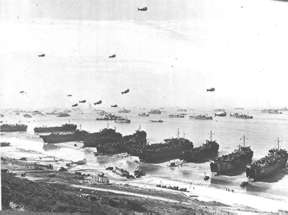
During the Normandy invasion of June 6, 1944, the Allies committed an enormous aerial armada in support of the landings. Roughly eleven thousand aircraft of all types took part in operations connected to D-Day, ranging from heavy bombers and fighters to transports and gliders carrying airborne troops.
A primary objective of the air campaign was to isolate the Normandy battlefield and make it impossible for the Germans to rush reinforcements to the coast. Allied aircraft struck bridges, rail lines, marshalling yards, and communications links across northern France, while fighters established near-total air superiority over the beachhead, allowing the invasion fleet and ground forces to operate with little interference from the Luftwaffe.
This overwhelming command of the air was decisive in the success of Operation Overlord. By paralyzing German movement and protecting the vulnerable landing forces, Allied air power proved a model of how aviation could shape the outcome of a major amphibious assault.