Japanese Kamikaze Attacks Begin
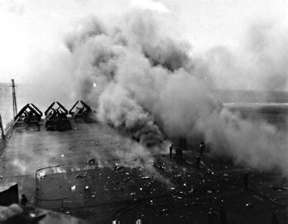
By late 1944, with the war turning decisively against them and the United States holding overwhelming air and naval superiority in the Pacific, the Japanese resorted to organized suicide attacks known as kamikaze. The tactic first appeared in significant numbers during the Battle of Leyte Gulf in October 1944 and reached its peak in 1945.
Kamikaze pilots flew single- or twin-engine aircraft, often loaded with explosives, and deliberately crashed them into Allied warships. Faced with dwindling resources and outclassed in conventional air combat, Japanese commanders calculated that a determined pilot guiding his aircraft into a ship could inflict far greater damage than conventional bombing.
The attacks intensified sharply during the campaigns for the Philippines and Okinawa, sinking and damaging numerous Allied vessels and causing heavy casualties among ship crews. While the suicide attacks reflected Japan's desperate strategic situation, they also exacted a serious toll on the U.S. fleet and underscored the ferocity of the war's final phase.