TWA Takes Delivery of the DC-1
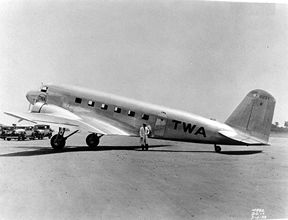
On September 15, 1933, TWA took delivery of the Douglas DC-1 at a time when airlines were racing to modernize and gain an advantage over their competitors. In order to challenge United Airlines, TWA commissioned Douglas Aircraft Company to design a new plane that could meet demanding performance standards, including the ability to fly over the Rocky Mountains with only one engine operating. Douglas’ chief designer succeeded in convincing Charles Lindbergh, who was serving as TWA’s technical advisor, to back the new design, clearing the way for one of the most important aircraft developments of the era.
The DC-1 was a breakthrough in commercial aviation. It was the first aircraft to use monocoque construction, in which the strength of the plane and its wings was carried by the outer skin rather than by a heavier internal framework alone. The aircraft was also the first to feature a two-speed propeller, another innovation that improved performance. Although only one example was built, the DC-1 became the foundation for later Douglas airliners and helped move passenger aviation into a more advanced and reliable age