Howard Hughes Crosses the U.S. in Under Ten Hours
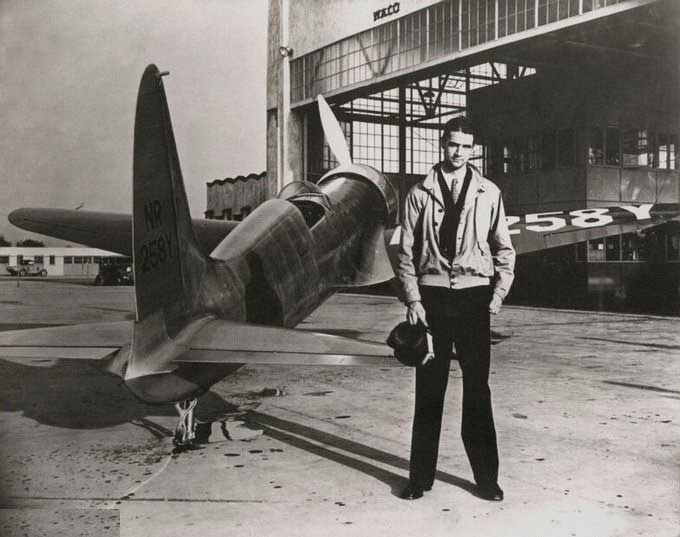
On January 19, 1937, the millionaire aviator and aircraft designer Howard Hughes flew across the United States in record time, completing the transcontinental journey in roughly 7 hours and 28 minutes and shattering his own earlier mark. Hughes had set a previous coast-to-coast record in 1936 of about 9 hours and 27 minutes.
For the 1937 flight Hughes flew a highly modified Northrop Gamma, a sleek monoplane fitted with a powerful Wright Cyclone radial engine. Flying at high altitude to take advantage of thinner air and favorable winds, he averaged a speed that no transcontinental flight had matched, demonstrating the dramatic gains in speed that streamlined design and supercharged engines made possible.
Hughes's record flights were part of a remarkable series of feats that made him one of the most famous aviators of the 1930s. His pursuit of speed and altitude records helped publicize the rapid advance of American aircraft technology and pointed toward the faster, higher-flying airliners and military planes that would soon define the next era of aviation.