Germans Test a New Airplane
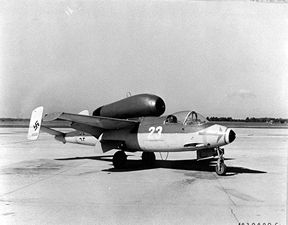
On August 27, 1939, just five days before Germany invaded Poland and plunged the world into the Second World War, a quieter revolution was unfolding at the Heinkel aircraft works at Rostock-Marienehe on the Baltic coast of Germany. At dawn that morning, test pilot Erich Warsitz climbed into the cramped cockpit of the Heinkel He 178, a small, sleek experimental aircraft of largely conventional appearance save for one radical distinction: it was powered not by a piston engine and propeller but by a turbojet engine — the HeS 3b, designed by the brilliant young physicist Hans von Ohain, who had been working with Ernst Heinkel since 1936 to translate the theoretical possibility of jet propulsion into a working reality.
The flight lasted only a few minutes, and the aircraft reached a speed of approximately 375 miles per hour, but what those few minutes demonstrated was of incalculable significance: that sustained powered flight was possible without a propeller, driven instead by the continuous combustion of fuel and the rearward expulsion of hot gases through a turbine. The age of the jet had arrived. The Heinkel He 178 was a proof-of-concept aircraft rather than a practical warplane, and its immediate impact on German military aviation was surprisingly limited.
Ernst Heinkel invited senior Luftwaffe officers to witness a demonstration flight in November 1939, but the assembled generals showed little enthusiasm, preoccupied as they were with the ongoing success of conventional aircraft in the early campaigns of the war. Development of operational German jet aircraft continued through other programs — most notably the Messerschmitt Me 262, which would eventually enter combat service in 1944 — while in Britain, Frank Whittle was independently developing his own jet engine, leading to the first flight of the Gloster E.28/39 in May 1941.
The He 178's true significance was recognized only in retrospect, as the aircraft that had proven a principle upon which all subsequent aviation would be built. Every commercial jetliner that crosses the Atlantic today, every military aircraft that patrols the world's skies, traces its technological lineage to those few revolutionary minutes over the Baltic coast on the morning of August 27, 1939.