First Manned Hot-Air Balloon Flight
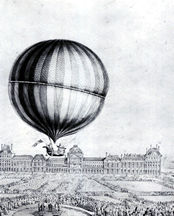
On November 21, 1783, Jean-Francois Pilatre de Rozier and the Marquis d'Arlandes lifted off from the grounds of the Chateau de la Muette on the outskirts of Paris to make the first manned free flight in history. Their craft was a hot-air balloon designed and built by the brothers Joseph-Michel and Jacques-Etienne Montgolfier, who had spent the previous year experimenting with the lifting power of heated air.
The balloon was kept aloft by a fire of straw and wool burned in a brazier suspended beneath its mouth, and the two men tended the flames by hand to maintain altitude. Rising several hundred feet, they drifted across Paris for roughly twenty-five minutes and covered some five miles before landing safely beyond the city.
The flight electrified Europe and is generally regarded as the dawn of human aviation. It demonstrated that people could be carried through the air in a controlled craft, and within days the rival hydrogen balloon of Jacques Charles would follow. The Montgolfier name became synonymous with ballooning, and the event opened more than a century of lighter-than-air experimentation that preceded powered flight.