Geoffrey de Havilland Builds His First Aircraft
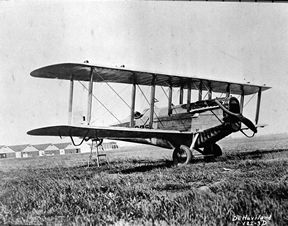
In 1909 the British engineer Geoffrey de Havilland built his first aircraft, a single-seat machine with a pusher configuration. He designed not only the airframe but also its small engine, of roughly 45 horsepower, an ambitious undertaking for a self-taught aviation pioneer in the earliest days of powered flight.
This first effort did not fly successfully, and was wrecked, but de Havilland learned from the experience and soon built a second, more capable aircraft. His talent quickly drew the attention of the British government's aeronautical establishment, and he went on to design aircraft for official factories and then for the Airco company during the First World War.
De Havilland's name became one of the most enduring in aviation. The de Havilland Aircraft Company, which he founded after the war, produced a long line of celebrated machines, including the Moth series of light aircraft, the wooden Mosquito of the Second World War, and the Comet, the world's first jet airliner. His 1909 experiment was the modest start of that long career.