Aerial Reconnaissance Proves Its Value at Tannenberg
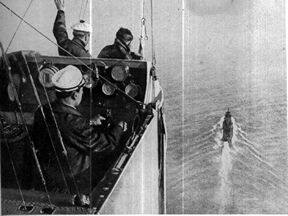
In the opening weeks of the First World War in 1914, aerial reconnaissance demonstrated its battlefield value on the Eastern Front. As German and Russian armies maneuvered across East Prussia, German aviators flying observation patrols brought back reports on the position and movement of the advancing Russian forces. This information helped German commanders understand that the two Russian armies were separated and acting without close coordination.
Acting on intelligence that combined intercepted wireless traffic with aerial observation, the German command was able to concentrate its forces and strike. The resulting victory, fought in late August 1914 around Tannenberg, shattered one of the Russian armies and became one of the most celebrated German triumphs of the war.
The campaign was an early and influential proof that the airplane, still barely a decade old as a practical machine, could serve as a strategic instrument rather than a mere curiosity. Within a few years every major combatant was investing heavily in reconnaissance aviation, the photographic interpretation that supported it, and ultimately the fighter aircraft built to deny the enemy that same view of the battlefield.