Vickers VC10
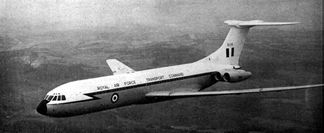
The Vickers VC10 was a British long-range jet airliner that flew for the first time on June 29, 1962. A four-engine aircraft, it was distinctive for mounting all four engines in pairs at the rear of the fuselage, paired with a high T-tail. This configuration gave the cabin a notably quiet interior and kept the wings clean for efficient lift.
The VC10 was designed to meet the requirements of the British Overseas Airways Corporation (BOAC) for an aircraft capable of operating from the hot, high, and short runways found along the airline's empire and Commonwealth routes, particularly in Africa. Its performance was broadly comparable to the Boeing 707, but its rear-engine layout and powerful wing allowed it to operate from shorter and more demanding airfields than its American rival.
Despite being well liked by passengers and crews, the VC10 met with only modest commercial success and sold in small numbers, largely to BOAC and a few other operators. A stretched Super VC10 followed. The type found a long second career with the Royal Air Force, which operated it for decades as a transport and aerial refueling tanker.