Grumman F-14 Tomcat
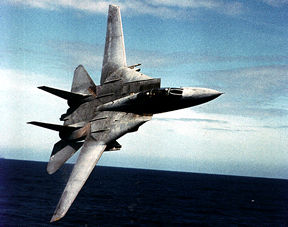
The Grumman F-14 Tomcat made its first flight on December 21, 1970, and was developed to serve as the U.S. Navy's primary carrier-based air superiority fighter. It replaced the F-4 Phantom in the fleet defense role and was designed to protect carrier battle groups from long-range air threats during the height of the Cold War.
A two-seat, twin-engine fighter, the Tomcat featured variable-geometry "swing wings" that swept back for high-speed flight and extended forward for slower carrier landings, giving it a capable maximum speed of well over 1,500 miles per hour. Central to its design was the integration of the AN/AWG-9 radar and the AIM-54 Phoenix long-range missile, a weapon system capable of tracking and engaging multiple targets at extraordinary distances, far beyond visual range.
The F-14 served the Navy for roughly three decades and became an enduring cultural icon, in part through its starring role in popular film. Over its career it took on additional missions, including precision strike with the addition of targeting pods, before being retired in favor of the F/A-18 Super Hornet. Iran, which received Tomcats before its 1979 revolution, remained a notable operator.