Fairchild A-10 Thunderbolt II
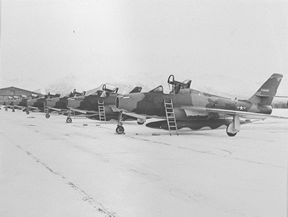
The Fairchild Republic A-10 Thunderbolt II, widely nicknamed the "Warthog," entered service with the U.S. Air Force in 1977 as a dedicated close air support aircraft. Unlike fast multirole fighters, the A-10 was purpose-built to operate low and slow over the battlefield, attacking enemy armor and supporting friendly ground troops directly. Its design grew out of lessons from the Vietnam War, which highlighted the need for a rugged, survivable platform devoted to supporting soldiers on the ground.
At the heart of the aircraft is the enormous GAU-8 Avenger seven-barrel rotary cannon, a Gatling-type gun built specifically to destroy tanks and armored vehicles. The A-10 can also carry a wide assortment of bombs and missiles, including anti-tank missiles, on multiple wing and fuselage stations. The aircraft was heavily armored, with a titanium "bathtub" protecting the pilot and redundant systems that allowed it to absorb significant battle damage and still return home.
The Air Force had been reluctant to develop a single-mission attack aircraft, traditionally favoring faster, more glamorous fighters. Nevertheless, the A-10 proved its worth in combat, most notably during the 1991 Gulf War, where it destroyed large numbers of Iraqi armored vehicles. Its effectiveness and durability led the Air Force to keep the aging fleet in service far longer than originally planned.