Soviets Introduce the MiG-19
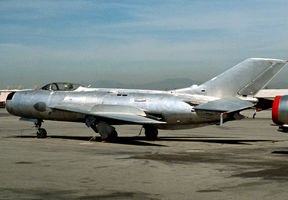
In 1954, the Soviet Union unveiled the Mikoyan-Gurevich MiG-19, the first Soviet aircraft capable of supersonic flight in level conditions and a significant leap forward in the relentless technological competition of Cold War aviation. The MiG-19 had been developed at remarkable speed — the Soviet design bureaus, acutely aware that the United States had introduced the supersonic F-100 Super Sabre in 1953, drove the program forward with characteristic urgency, and the prototype first flew in September 1953 before entering service with Soviet Air Forces in 1955.
Powered by two Tumansky RD-9B afterburning turbojet engines mounted side by side in the rear fuselage — a twin-engine configuration that distinguished it from most of its Western contemporaries — the MiG-19 could exceed Mach 1 in level flight and reach a top speed of approximately Mach 1.3, giving Soviet pilots supersonic capability for the first time and closing the performance gap that the F-100 had momentarily opened. Despite its advanced performance, the aircraft retained the design simplicity and structural robustness that had characterized the MiG-15 and MiG-17 before it — qualities that made it reliable in the hands of pilots with varying levels of training and maintainable under austere field conditions far from sophisticated support facilities.
The MiG-19's operational career was briefer than its designers had anticipated, overtaken relatively quickly by the even more capable MiG-21, yet it compiled a combat record of considerable significance and was exported to numerous Soviet client states and allies. The aircraft's most consequential moment in Western consciousness came on May 1, 1960, when a pair of MiG-19s was scrambled to intercept the U-2 spy plane piloted by Francis Gary Powers over Soviet territory — though it was ultimately a surface-to-air missile rather than the intercepting fighters that brought Powers down, the incident exposed the depth of American aerial surveillance of the Soviet Union and triggered a major international crisis.
The MiG-19 was also operated in significant numbers by the Chinese People's Liberation Army Air Force, which built its own unlicensed copy designated the Shenyang J-6, producing more than 2,000 aircraft and flying the type in combat during border clashes with Soviet forces in 1969. The J-6 remained in Chinese service until 2010 — more than five decades after the original MiG-19's first flight — a testament to the fundamental soundness of the design that Mikoyan and Gurevich had produced with such urgency in the early 1950s.