Douglas DC-9
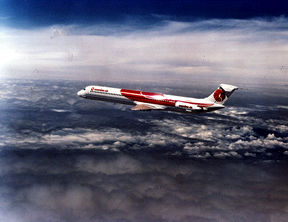
The Douglas DC-9 was a twin-engine, short-to-medium-range jet airliner unveiled in the mid-1960s. Designed for shorter routes and smaller airports, it placed its two engines at the rear of the fuselage and used a T-tail configuration, a layout that kept the wings clean and allowed efficient operation from a wide variety of airfields.
McDonnell Douglas marketed the DC-9 aggressively, offering it in a range of sizes and seating arrangements to suit the needs of many different airlines. This flexibility helped make it a commercial success, with well over a thousand DC-9s sold to carriers around the world during its production run.
The DC-9 proved highly durable and spawned an extensive family of derivatives, including the stretched and updated MD-80 and MD-90 series and, ultimately, the Boeing 717. Many DC-9s remained in regular airline service for decades, making the design one of the most enduring and influential short-haul jetliners ever built.