Concorde Supersonic Transport
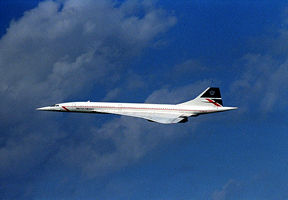
Concorde was a supersonic passenger airliner developed jointly by the British and French aerospace industries, the product of a landmark Anglo-French collaboration. The first prototype made its maiden flight in 1969, and the aircraft entered commercial service in 1976 after a development program spanning roughly two decades from initial design work to airline operations.
Capable of cruising at about twice the speed of sound, Concorde could cross the Atlantic in a fraction of the time taken by conventional jets, with its distinctive delta wing and drooping nose becoming icons of aviation. It was operated principally by British Airways and Air France, primarily on prestige routes between Europe and North America. Its small passenger capacity, high fuel consumption, and the disruptive sonic boom limited its commercial reach.
Concorde remained a symbol of technological ambition throughout its career, but high operating costs, environmental concerns, and a fatal crash in 2000 contributed to its retirement in 2003. No supersonic airliner has since replaced it in scheduled service, leaving Concorde a unique chapter in commercial aviation history.