Caravelle Introduced
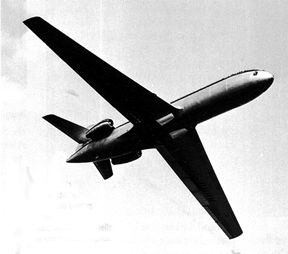
On May 9, 1959, the French aircraft manufacturer Sud Aviation — later to become part of Aérospatiale — inaugurated commercial service with the SE 210 Caravelle, as Air France placed the elegant twin-engine jet into scheduled service for the first time, connecting Paris with Istanbul and Athens on its inaugural flights. The Caravelle was a genuinely revolutionary concept in commercial aviation: where every other jet airliner of the era had been designed for long-haul intercontinental routes, the Caravelle was conceived specifically for the short and medium-haul market, carrying between 60 and 99 passengers depending on cabin configuration over the regional European routes that had previously been the exclusive domain of piston-engine aircraft.
Its most distinctive and influential design feature was the placement of its two Rolls-Royce Avon turbojet engines mounted in pods on either side of the rear fuselage rather than beneath the wings — a configuration that had never been used on a commercial airliner before and that produced several immediate practical advantages: the wing was aerodynamically clean and free of engine nacelles, the cabin was dramatically quieter than any existing jet airliner since the engines were located behind the passenger cabin, and the aircraft had a low, unobstructed wing that made ground handling and boarding simpler and faster.
The Caravelle's clean lines and rear-engine configuration gave it an aesthetic elegance that passengers and pilots alike found immediately appealing, and Air France's early services demonstrated that the short-haul jet market was not merely viable but enormously lucrative. The Caravelle's impact on the subsequent development of commercial aviation was profound and direct, extending far beyond France and far beyond the 280 aircraft that were eventually built.
The rear-mounted twin-engine configuration that Sud Aviation pioneered was studied with close attention by aircraft manufacturers worldwide, and it was adopted — with acknowledgment of the French original — by the Douglas DC-9, the British BAC One-Eleven, and the Boeing 727, three of the most successful short and medium-haul jets of the 1960s that together defined the shape of regional jet travel for the following two decades. Boeing actually purchased a Caravelle for evaluation and testing, and the influence of its rear-engine layout on the 727's configuration has been openly acknowledged in aviation history.
In service the Caravelle proved enormously popular with both airlines and passengers: it was operated at various points by more than 30 airlines worldwide including United Airlines, which became the only American carrier to operate the type, and SAS, Sabena, Swissair, and Iberia among its European customers. The aircraft that Air France first put into service on that May morning in 1959 thus occupies a unique place in aviation history — not merely as France's most successful commercial aircraft program but as the progenitor of an entire category of short-haul jet travel that has since carried billions of passengers on the routes that connect the cities and regions of the modern world.