HistoryCentral Presents History Run
An interactive journey through American history — from the creators of HistoryCentral’s trusted history apps.
 >
>Battle of Wolf Mountain
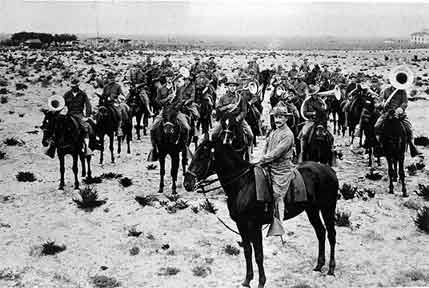
The Battle of Wold Mountain
On January 8, 1877 US troops under the command of Captain Edumund Butler, 5th US infantry defeated a a force of 500 Sioux and Cheyenne. The battle took place at Wolf Mountain in Montana, and the Indians were led by Chief Crazy Horse.
Following Custer’s defeat at the Battle of the Little Bighorn, the army dispatched a substantial contingent of troops to the Montana territory with the objective of subjugating it. Consequently, numerous Native Americans commenced their return to their reservations. General Nelson Miles led a force of soldiers to achieve a decisive victory against Sitting Bull. Sitting Bull was prepared to surrender, but when his delegation was ambushed and killed by US Army Crow scouts, his men demanded retribution. Crazy Horse attempted to draw Miles’ forces up the Tongue River, which was subsequently called. Miles positioned his camp just south of present-day Birney, Montana. Overnight, heavy snowfall descended upon the region, accompanied by a significant drop in temperatures. The following morning, Crazy Horse and his men launched an assault on Miles’ forces, but they were unsuccessful in dislodging them. Miles’ troops responded with a counterattack, although they did not entirely defeat the Indians, they managed to drive them back. While this tactical outcome may not be considered a complete victory for the army, the strategic significance of the fact that, amidst the winter’s harshness and deep snow, the army was able to successfully pursue the Indians convinced Crazy Horse that his situation was hopeless, leading to his eventual surrender.