 >
>The Invasion-June 25, 1950
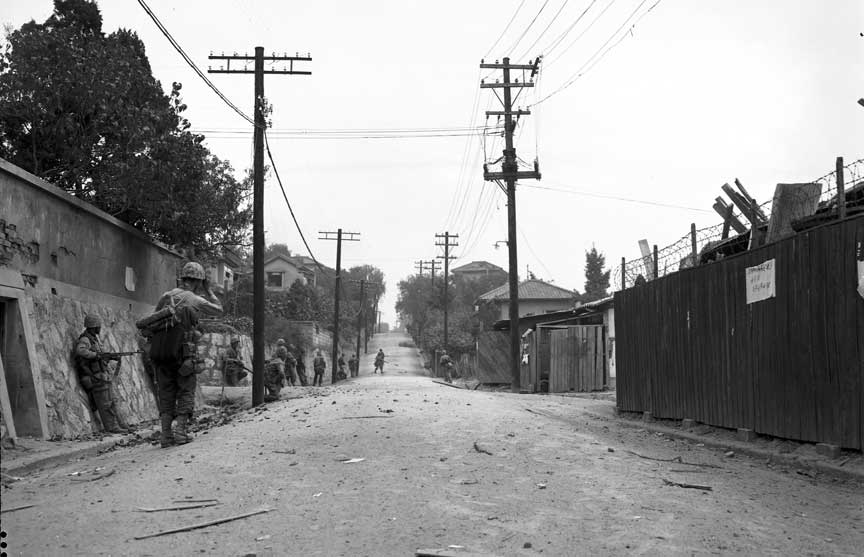
On June 25, 1950, North Korea launched a military invasion with approximately 90,000 troops. In contrast, South Korea had less than 50,000 troops engaged in the defense. Despite the disparity in numbers, North Korea advanced rapidly.
On June 25th, the North Korean People’s Army deployed an invasion force comprising 90,000 men and 150 T-34 tanks. The South Korean Army, facing the invasion, consisted of a nominal force of 38,000 men, with only one-third of them on duty at the commencement of the attack on the morning of the 25th.
Captain Joseph Darrigo, attached to the ROK 12th Regiment situated north of Kaeson, was the first American to detect the impending invasion. He was awakened by artillery fire and promptly dressed and drove into Kaesong. Upon entering the city, he observed North Koreans unloading tanks from railcars at the rail station and swiftly retreated south.
The North Korean invasion took place along two primary axes: the Charwan-Uijonngbu-Seoul axis, a valley that invaders had utilized for centuries, and a secondary group descending along a coastal highway. The South Korean forces were heavily outnumbered, approximately 5-1, and lacked the necessary heavy weapons to effectively counter the North Korean advance. By Monday, it became evident that the North Koreans posed a significant threat to Seoul, prompting the commencement of an evacuation of dependents from the city.
The decisive blow to the South Korean army occurred when the Han River bridges, situated north of Seoul, were prematurely detonated. Plans had stipulated that the crucial bridges would be destroyed after the South Korean army had successfully crossed the river. Regrettably, the bridges were detonated while the South Korean troops were still traversing the river, resulting in the stranding of 10,000 South Koreans and effectively rendering them incapable of effective combat.