 >
>Walker US Commander
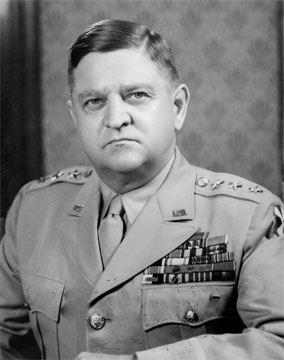
General Walker
By August 1950, as North Korean forces pushed U.N. troops into the shrinking Pusan Perimeter, U.S. reinforcements poured in. General Walton Walker took command on the ground, vowing there would be no retreat, declaring: “There will be no Dunkirk, there will be no Bataan. We will fight until the end.”
In the summer of 1950, the North Korean People’s Army pressed its advance deep into South Korea, forcing American and South Korean forces back toward the southeastern tip of the peninsula. By August, U.N. forces had consolidated within the Pusan Perimeter, a 140-mile defensive line anchored on the vital port city of Pusan. With the fate of Korea hanging in the balance, American reinforcements began arriving in large numbers to bolster the defense.
The commander of U.S. ground forces, General Walton Walker, understood the stakes. Facing mounting pressure and the risk of annihilation, Walker issued one of the most resolute orders of the war. He declared that there would be no “Korean Dunkirk” — no mass evacuation or withdrawal. “We are fighting a battle against time,” he told his men. “There will be no more retreating, withdrawal, or readjustment of the lines… Capture by these people is worse than death itself.”
Walker’s uncompromising stand galvanized the defenders of the Pusan Perimeter. Every unit was ordered to counterattack to keep the enemy off balance, and the message was clear: survival depended on holding the line. His leadership helped stabilize the front long enough for reinforcements and supplies to arrive, setting the stage for General MacArthur’s bold counterstroke at Inchon the following month. The Pusan Perimeter thus became the turning point that prevented total defeat in the first critical months of the Korean War.