Boeing Unveils Its Stratoliner
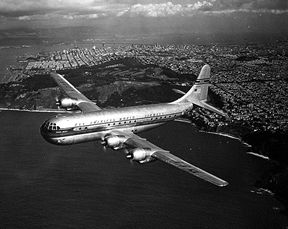
On December 31, 1938, Boeing Aircraft took its newest and most technologically advanced passenger aircraft aloft for the first time, marking a pivotal moment in the history of commercial aviation. The Boeing 307 Stratoliner was the first passenger aircraft in the world to feature a fully pressurized cabin, a development that fundamentally changed what air travel could offer the flying public. Earlier airliners had been constrained to relatively low altitudes where passengers were subject to turbulence, weather, and the physical discomforts of unpressurized flight.
The Stratoliner's pressurized fuselage — circular in cross-section specifically to withstand the stresses of pressurization — allowed it to cruise comfortably between 14,000 and 20,000 feet, well above most weather systems and far higher than any other passenger aircraft of its era. The aircraft shared its wings, engines, and tail assembly with the B-17 Flying Fortress bomber, giving Boeing an efficient path to a sophisticated new design, and it was powered by four Wright GR-1820 Cyclone engines capable of pushing it to a cruising speed of approximately 220 miles per hour.
Transcontinental and Western Air — better known as TWA — recognized the Stratoliner's potential immediately and placed the first commercial order for the type, ultimately acquiring five aircraft. Pan American Airways also ordered three. In TWA service, the Stratoliner reduced the transcontinental crossing time to approximately 11 hours westbound, a remarkable achievement that gave the airline a significant competitive advantage.
Passengers could now travel in a heated, pressurized cabin with a dedicated lounge area — a level of comfort that set a new standard for air travel and pointed toward the future of long-haul passenger aviation. The aircraft's commercial career was brief, however. Following the United States' entry into World War II after Pearl Harbor, the military requisitioned the Stratoliner fleet, and TWA's aircraft were converted for military transport duties.
By the time the war ended, the jet age was approaching and the Stratoliner never returned to meaningful commercial service, leaving it as a transitional landmark — a machine that had shown precisely where aviation was headed even if it never fully arrived there itself.