Passenger Service Across the Atlantic
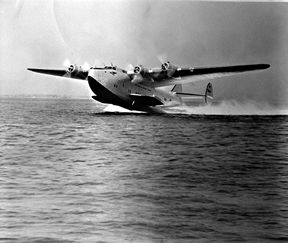
On May 20, 1939, Pan American World Airways inaugurated the first regularly scheduled commercial air service across the Atlantic Ocean, a milestone that marked the dawn of a new era in long-distance travel and permanently altered humanity's relationship with distance. The inaugural flight operated aboard the Boeing 314 Flying Boat — one of the most magnificent aircraft of its age — a massive four-engine seaplane capable of carrying up to 74 passengers in accommodations that rivaled the comfort of an ocean liner, complete with sleeping berths, a dining salon, and a bridal suite.
The route was a carefully staged ocean crossing rather than a single nonstop dash, with scheduled stops at the Azores, Lisbon, and Marseilles before terminating at Southampton in England, with the entire journey taking approximately three days. The British followed with their own weekly transatlantic service beginning August 11th of the same year, establishing the principle of reciprocal trans-ocean air competition that would define international aviation for decades to come.
Pan American moved quickly to refine and accelerate the service, soon cutting the crossing time to approximately 27 hours by adopting the more direct northern Atlantic routing — weather permitting, as the notoriously harsh North Atlantic conditions made the southern route a necessary alternative in the winter months. The Boeing 314A Flying Boat that made this possible was a genuine engineering marvel, with a range of approximately 3,500 miles and a cruising speed of around 183 miles per hour, powered by four Wright Double Cyclone radial engines.
Pan Am's visionary president Juan Trippe had spent years laying the groundwork for the route, negotiating landing rights, establishing weather stations, and deploying the network of support infrastructure that regular transatlantic service demanded. The outbreak of World War II just months after the service began would dramatically curtail civilian transatlantic flying, but the principle had been established: the Atlantic was no longer a barrier but a highway, and the age of mass intercontinental air travel — still a generation away in practical terms — had taken its first scheduled, commercial steps.