Northrop F-89 Scorpion
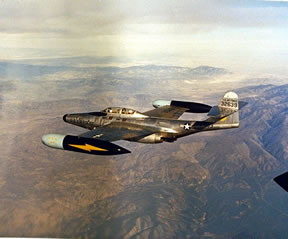
The Northrop F-89 Scorpion was a large twin-engine, two-seat all-weather interceptor built to defend North America against Soviet bombers in the early Cold War. First flown in August 1948, it carried a pilot and a radar operator and was designed from the start around its radar and fire-control system rather than around dogfighting. Early versions packed nose cannon, but the type is best remembered for its missile armament: the F-89H carried Falcon guided missiles in its wingtip pods, and the F-89J became the first combat aircraft armed with the nuclear-tipped MB-1 Genie air-to-air rocket, famously fired in a live test in 1957.
Built by Northrop and powered by two Allison J35 turbojets, the Scorpion served Air Defense Command and the Air National Guard through the 1950s and into the 1960s. Heavy and unspectacular in performance, it was nonetheless a key sentinel of the continental air-defense network.
Specifications
- Manufacturer
- Northrop
- Type
- All-weather interceptor
- Crew
- 2 (pilot and radar operator)
- First Flight
- August 16, 1948
- Powerplant
- 2 x Allison J35 turbojets, ~5,100 lb thrust each
- Max Speed
- 642 mph
- Service Ceiling
- 50,000 ft
- Length
- 53 ft 8 in
- Wingspan
- 59 ft 8 in
- Loaded Weight
- 36,000 lb
- Armament
- Falcon missiles; MB-1 Genie nuclear rocket (F-89J); early cannon