McDonnell Douglas F-4 Phantom II
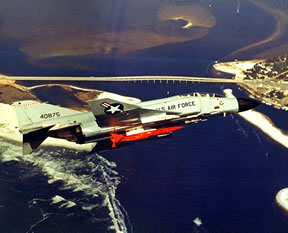
The McDonnell Douglas F-4 Phantom II was one of the most important and versatile combat aircraft of the Cold War era. First flown in May 1958, the large twin-engine two-seat fighter was originally developed for U.S. Navy fleet air defense and entered service in 1961, quickly setting numerous speed and altitude records. Its capability was so impressive that the Air Force adopted it as the F-4C, which first flew in 1963, an unusual case of the Air Force buying a Navy design.
The Phantom served as a fighter, interceptor, bomber, reconnaissance platform and, in "Wild Weasel" form, a defense-suppression aircraft. It carried a heavy ordnance load and a mix of radar- and heat-guided missiles, and saw extensive combat over Vietnam with all three U.S. services. More than 5,000 were built for the United States and allied nations, making it one of the most-produced supersonic jets ever, with some examples serving into the 21st century.
Specifications
- Manufacturer
- McDonnell Douglas
- Type
- Fighter-bomber / interceptor
- Crew
- 2
- First Flight
- May 27, 1958
- Powerplant
- 2 x General Electric J79 turbojets, approx. 17,800 lbf each with afterburner
- Max Speed
- Mach 2.2 (approx. 1,470 mph)
- Range
- 1,600+ miles
- Service Ceiling
- 60,000 ft
- Length
- 63 ft
- Wingspan
- 38 ft 5 in
- Armament
- AIM-7 Sparrow and AIM-9 Sidewinder missiles plus up to 18,000 lb of ordnance (20mm cannon on F-4E)