General Dynamics F-16 Fighting Falcon
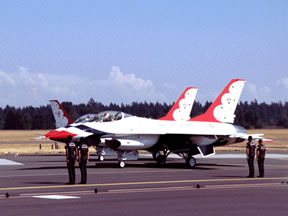
The General Dynamics F-16 Fighting Falcon is a compact, single-engine multirole fighter that became one of the most widely produced and exported combat aircraft in the world. Designed as a lightweight, affordable complement to the larger F-15, it first flew in 1974 and entered Air Force service in the late 1970s. The F-16 introduced several innovations, including a frameless bubble canopy for superior visibility, a side-mounted control stick, a reclined seat to help pilots withstand high g-loads, and a pioneering fly-by-wire flight control system that makes the relaxed-stability airframe extremely agile.
Powered by a single Pratt & Whitney or General Electric afterburning turbofan, it can reach about Mach 2. Armed with an internal 20mm cannon and a wide array of air-to-air and air-to-ground weapons, the F-16 excels in both dogfighting and strike roles. Thousands have been built and it serves with dozens of air forces worldwide.
Specifications
- Manufacturer
- General Dynamics
- Type
- Multirole fighter
- Crew
- 1 (2 in D model)
- First Flight
- January 20, 1974
- Powerplant
- 1 x Pratt & Whitney F100 or General Electric F110 turbofan, approx. 29,000 lbf with afterburner
- Max Speed
- Mach 2 (approx. 1,500 mph)
- Range
- Over 2,000 miles ferry range
- Service Ceiling
- Above 50,000 ft
- Length
- 49 ft 5 in
- Wingspan
- 32 ft 8 in
- Loaded Weight
- 37,500 lb (max takeoff)
- Armament
- 1 x 20mm M61 cannon plus up to six air-to-air missiles and external air-to-surface ordnance