General Dynamics F-111 Aardvark
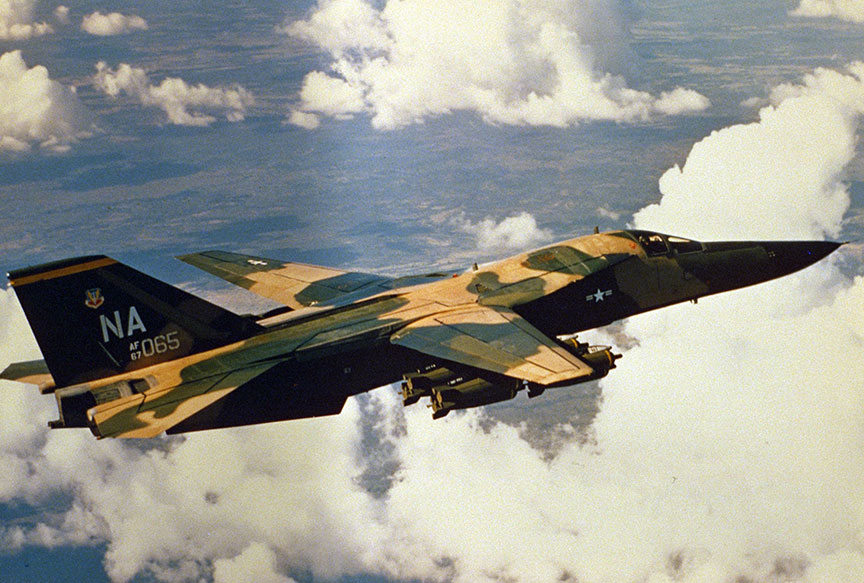
The General Dynamics F-111 Aardvark was a long-range, all-weather strike aircraft and the first production aircraft to enter service with variable-geometry "swing wings," allowing it to sweep its wings for high-speed dash or extend them for takeoff, landing and efficient cruise. Born from the controversial 1960s TFX program that tried to satisfy both Air Force and Navy needs, the design won out over Boeing in 1962; the Navy F-111B was later canceled, but the Air Force F-111A first flew in December 1964 and entered service in 1967.
The F-111 pioneered terrain-following radar, enabling high-speed low-level penetration at night, and a crew escape capsule for its two-man side-by-side crew. Powered by two Pratt & Whitney TF30 afterburning turbofans, it could exceed Mach 2. F-111s flew combat in Vietnam, the 1986 Libya raid, and the Persian Gulf War. A total of 566 were built before the Aardvark retired in 1996.
Specifications
- Manufacturer
- General Dynamics
- Type
- Strike/attack aircraft
- Crew
- 2
- First Flight
- December 21, 1964
- Powerplant
- 2 x Pratt & Whitney TF30-P-3 turbofans, 18,500 lbf each with afterburner
- Max Speed
- Mach 2.2 (approx. 1,450 mph)
- Range
- 3,600+ miles
- Service Ceiling
- 57,000 ft
- Length
- 73 ft 6 in
- Wingspan
- 63 ft extended / 32 ft swept
- Loaded Weight
- 92,500 lb (max takeoff)
- Armament
- 1 x 20mm M61 cannon plus up to 25,000 lb of conventional or nuclear ordnance