North American XB-70 Valkyrie
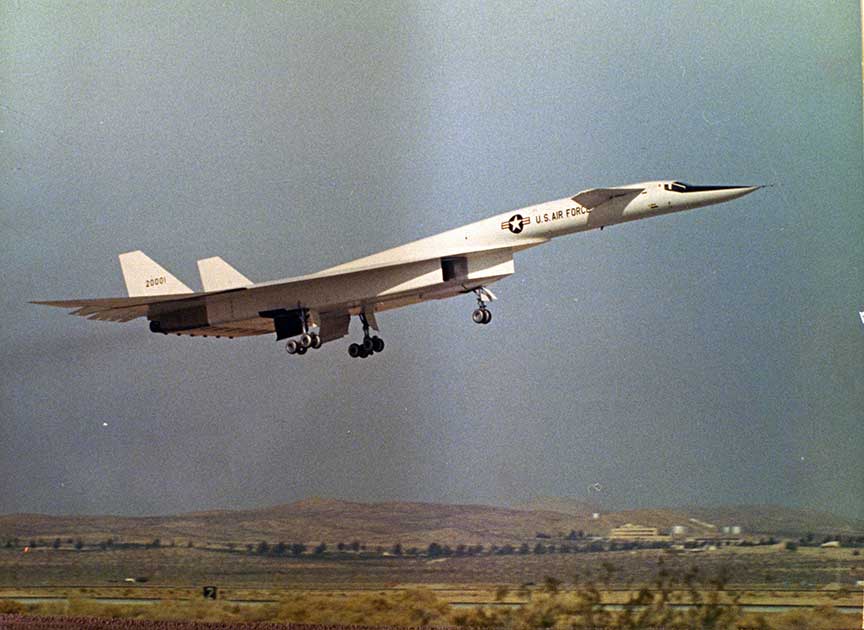
The North American XB-70 Valkyrie was an experimental Mach 3 strategic bomber prototype developed in the late 1950s and early 1960s to fly at extreme speed and altitude beyond the reach of Soviet defenses. Powered by six General Electric YJ93 turbojets, the enormous delta-wing aircraft used compression lift and folding wingtips to cruise at three times the speed of sound near 70,000 feet, and was built largely from stainless steel honeycomb and titanium to withstand aerodynamic heating.
By the time it flew in 1964, advances in surface-to-air missiles had made high-altitude penetration vulnerable, and the bomber program was cancelled. Only two prototypes were built; one was lost in a 1966 mid-air collision during a photo flight. The surviving Valkyrie became a valuable high-speed research aircraft for NASA and the Air Force before being preserved in a museum.
Specifications
- Manufacturer
- North American
- Type
- Experimental strategic bomber (prototype)
- Crew
- 2
- First Flight
- September 21, 1964
- Powerplant
- Six General Electric YJ93-GE-3 turbojets, about 28,800 lb thrust each with afterburner
- Max Speed
- Mach 3 (about 2,056 mph)
- Range
- About 4,288 mi
- Service Ceiling
- 77,250 ft
- Length
- 185 ft 10 in
- Wingspan
- 105 ft
- Loaded Weight
- 542,000 lb max takeoff