Boeing P-12 / XP-12
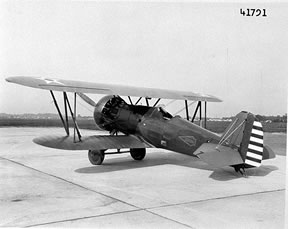
The Boeing P-12 was one of the most important U.S. Army Air Corps fighters of the early 1930s and, along with its Navy counterpart the F4B, among the most successful American biplane fighters. The prototype, originally a company venture designated Model 83/89, led to the XP-12 evaluation aircraft and a large family of production P-12 variants. Compact, agile, and powered by a Pratt & Whitney Wasp radial engine, the P-12 combined a fabric-covered welded-steel fuselage with light, maneuverable handling that made it a favorite of Army pilots.
Successive versions introduced metal fuselages, improved cowlings, and tail refinements. More than 360 were built for the Army between 1929 and 1932, equipping pursuit squadrons across the United States. The P-12/F4B series marked the high point of American biplane fighter development just before the transition to monoplane fighters later in the decade.
Specifications
- Manufacturer
- Boeing Airplane Company
- Type
- Pursuit (fighter) biplane
- Crew
- 1
- First Flight
- 1929
- Powerplant
- 1 x Pratt & Whitney R-1340 Wasp radial, ~500 hp
- Max Speed
- ~189 mph
- Service Ceiling
- ~26,300 ft
- Length
- 20 ft 3 in
- Wingspan
- 30 ft
- Armament
- 2 x .30 in machine guns (or 1 x .30 + 1 x .50); light bombs