Boeing XP-4
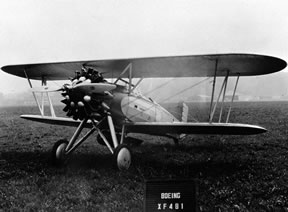
The Boeing XP-4 was an experimental American biplane fighter of the late 1920s, developed from the company's successful PW-9 series. In 1926 the U.S. Army Air Corps, eager to exploit the turbo-supercharger for high-altitude performance, had Boeing rebuild the last PW-9 with a supercharged 510 hp Packard 1A-1500 engine. To carry the added weight and a heavier armament of four machine guns, the lower wing span was extended. Delivered to Wright Field on 27 July 1927, the XP-4 proved disappointing: the Packard engine could not overcome roughly 800 lb of extra weight, and the aircraft handled worse than the PW-9 it was meant to improve upon.
After only about 4.5 hours of flight testing it was permanently grounded, and the project was abandoned. The XP-4 nonetheless illustrates the Army's early interwar drive to extract greater altitude performance from existing pursuit designs.
Specifications
- Manufacturer
- Boeing Aircraft (Model 58)
- Type
- Experimental fighter (biplane)
- Crew
- 1
- First Flight
- 1927 (delivered 27 July 1927)
- Powerplant
- 1 x supercharged 510 hp Packard 1A-1500 V-12
- Max Speed
- 161 mph
- Service Ceiling
- 22,850 ft
- Length
- 23 ft 11 in
- Wingspan
- 32 ft 1 in
- Loaded Weight
- 3,650 lb (gross)
- Armament
- 4 x machine guns (two .30 cal nose-mounted plus two under lower wing)