Curtiss SOC Seagull
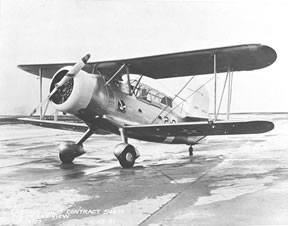
The Curtiss SOC Seagull was a single-engine scout-observation seaplane designed for the U.S. Navy and first flown in 1934. A two-seat biplane that could operate either on a central float with wingtip stabilizing floats or on a wheeled undercarriage, it was intended to be catapult-launched from battleships and cruisers and recovered at sea for scouting and gunfire spotting. Power came from a Pratt & Whitney R-1340 Wasp radial engine, and armament comprised a fixed forward-firing machine gun for the pilot and a flexible gun for the observer.
Remarkably, although the more modern SO3C Seamew was meant to replace it, the older Seagull proved more reliable and outlasted its successor, returning to frontline catapult duty and serving throughout World War II. The SOC's long and dependable career made it one of the most successful shipboard observation aircraft of the U.S. Navy.
Specifications
- Manufacturer
- Curtiss Aeroplane & Motor Company
- Type
- Scout-observation floatplane
- Crew
- 2
- First Flight
- 1934
- Powerplant
- 1 x Pratt & Whitney R-1340 Wasp, 550 hp
- Max Speed
- 165 mph
- Range
- 675 mi
- Service Ceiling
- 15,000 ft
- Length
- 22 ft 2 in
- Wingspan
- 32 ft 8 in
- Loaded Weight
- 3,263 lb (gross)
- Armament
- 2 x .30 in machine guns; light bombs