Boeing P-26 Peashooter
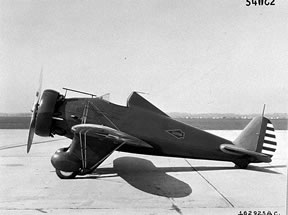
The Boeing P-26, nicknamed the "Peashooter," was the U.S. Army Air Corps' first all-metal monoplane fighter and the first to enter squadron service. Introduced in the mid-1930s, it bridged the gap between the fabric-covered biplanes of the 1920s and the modern fighters of World War II. The P-26 retained traditional features such as an open cockpit, fixed landing gear, and external wire bracing, yet its low-wing monoplane layout and stressed-metal construction made it markedly faster than its biplane predecessors.
About 150 were built for the Army, and some were exported to China and the Philippines, where they saw combat against Japanese aircraft in the opening days of the Pacific war. Though quickly outclassed, the Peashooter was a popular and significant transitional design that gave many U.S. pilots their first taste of modern monoplane fighters.
Specifications
- Manufacturer
- Boeing Aircraft Company
- Type
- Single-seat fighter
- Crew
- 1
- First Flight
- 1932
- Powerplant
- 1 x Pratt & Whitney R-1340 Wasp radial, approx. 500-600 hp
- Max Speed
- approx. 234 mph
- Range
- approx. 360 mi
- Service Ceiling
- approx. 27,000 ft
- Length
- 23 ft 9 in
- Wingspan
- 27 ft 11 in
- Loaded Weight
- approx. 3,060 lb (gross)
- Armament
- 2 x machine guns; light bomb load