Curtiss F7C-1 Seahawk
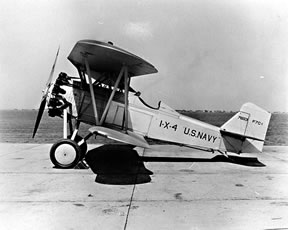
The Curtiss F7C Seahawk was a carrier-capable biplane fighter operated mainly by the U.S. Marine Corps in the late 1920s and early 1930s. The prototype XF7C-1 first flew on 28 February 1927; after the Navy requested modifications, including sweepback on the upper wing, 17 production F7C-1s were built. The aircraft had a fabric-covered structure with a spruce-framed upper wing and a fuselage of mixed aluminum and steel tubing, sturdy enough to permit use as a dive bomber as well as a fighter.
Power came from a 450 hp Pratt & Whitney R-1340 Wasp radial. The F7C-1 entered service with Marine squadron VF-5M (later VF-9M) at Quantico, Virginia. Built in small numbers, the Seahawk saw only limited service but is notable as one of Curtiss's early radial-engine naval fighters and as an aircraft closely associated with early Marine Corps aviation.
Specifications
- Manufacturer
- Curtiss
- Type
- Carrier fighter (biplane)
- Crew
- 1
- First Flight
- 28 February 1927 (XF7C-1)
- Powerplant
- 1 x 450 hp Pratt & Whitney R-1340 Wasp radial
- Max Speed
- 155 mph
- Range
- 330 mi
- Service Ceiling
- 22,100 ft
- Length
- 22 ft 7 in
- Wingspan
- 30 ft 8 in
- Loaded Weight
- 2,782 lb (loaded)
- Armament
- 2 x .30 cal machine guns