Curtiss CR-1 Racer
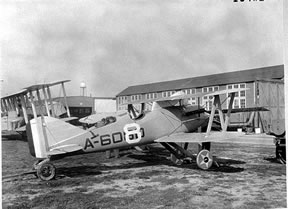
The Curtiss CR was a purpose-built racing biplane designed for the U.S. Navy in 1921, one of the famous family of Curtiss racers that pushed the boundaries of speed in the early 1920s. A compact single-seat biplane with a streamlined monocoque fuselage and staggered single-bay wings braced by N-struts, the CR-1 was powered by a Curtiss engine of around 400 to 425 horsepower. Flown by Bert Acosta, the CR-1 won the 1921 Pulitzer Trophy race at an average speed of about 177 mph, finishing nearly two minutes ahead of its nearest rival.
Two landplane examples were built as the CR-1 and CR-2, and both were later converted to floatplanes as the CR-3 and CR-4 for the Schneider Trophy seaplane races. The CR series demonstrated advanced aerodynamic and structural ideas, including wing-surface radiators, that would influence Curtiss's later record-setting racers.
Specifications
- Manufacturer
- Curtiss Aeroplane & Motor Company
- Type
- Racing biplane
- Crew
- 1
- First Flight
- 1921
- Powerplant
- 1 x Curtiss CD-12, approx. 400-425 hp
- Max Speed
- approx. 186 mph