Curtiss CS-1
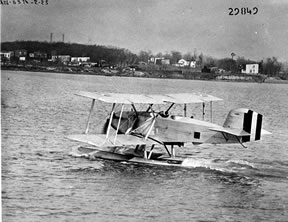
The Curtiss CS-1 was an American reconnaissance and torpedo bomber biplane built for the U.S. Navy in the early 1920s. A large single-engine machine, it was unusual in having a lower wing of greater span than the upper, with wings that folded back for shipboard stowage. The pilot and gunner sat in tandem open cockpits, while a third crewman inside the fuselage served as bombardier and radio operator; a torpedo could be carried semi-recessed beneath the fuselage.
The undercarriage was readily interchangeable between wheels and twin floats, allowing operation from carriers, fields, or water. Curtiss built six CS-1s in 1923, but in a famous episode the Navy put the production contract out to competitive bid and Martin underbid Curtiss for its own design, building the aircraft as the SC-1. The CS thus saw limited Curtiss production but is notable as an early U.S. carrier-capable torpedo plane and for the Curtiss-Martin contracting controversy it sparked.
Specifications
- Manufacturer
- Curtiss
- Type
- Torpedo bomber / scout (biplane)
- Crew
- 3
- First Flight
- 1923
- Max Speed
- 101 mph
- Range
- 965 mi
- Length
- 41 ft 7 in
- Wingspan
- 56 ft
- Loaded Weight
- 9,335 lb (gross)
- Armament
- 1 x torpedo or bombs; flexible machine gun