Witteman-Lewis XNBL-1 Barling Bomber
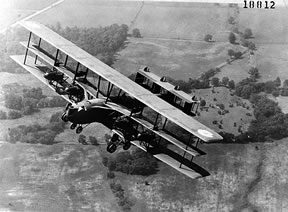
The Barling Bomber, officially the Witteman-Lewis XNBL-1 (Experimental Night Bomber, Long Range), was an enormous triplane built in the early 1920s to demonstrate the concept of strategic bombing championed by General Billy Mitchell. Designed by Walter Barling and assembled by the Witteman-Lewis Company at Wilbur Wright Field, Ohio, it was the largest aircraft in the world at the time of its first flight on 22 August 1923. The huge machine had three wings, multiple tails, and a many-wheeled undercarriage, and was powered by six 420 hp Liberty engines—four pulling and two pushing.
Underpowered and ponderous, it could not climb over the Appalachians fully loaded and proved impractical, flying only a handful of times before being stored and ultimately scrapped in 1928. Though a failure, the Barling Bomber was an important early experiment in long-range heavy bombardment.
Specifications
- Manufacturer
- Witteman-Lewis Company
- Type
- Experimental heavy bomber (triplane prototype)
- Crew
- 6
- First Flight
- 22 August 1923
- Powerplant
- 6 x Liberty L-12, 420 hp each
- Max Speed
- approx. 96 mph
- Service Ceiling
- approx. 7,725 ft
- Length
- 65 ft
- Wingspan
- 120 ft