Curtiss P-40 Warhawk
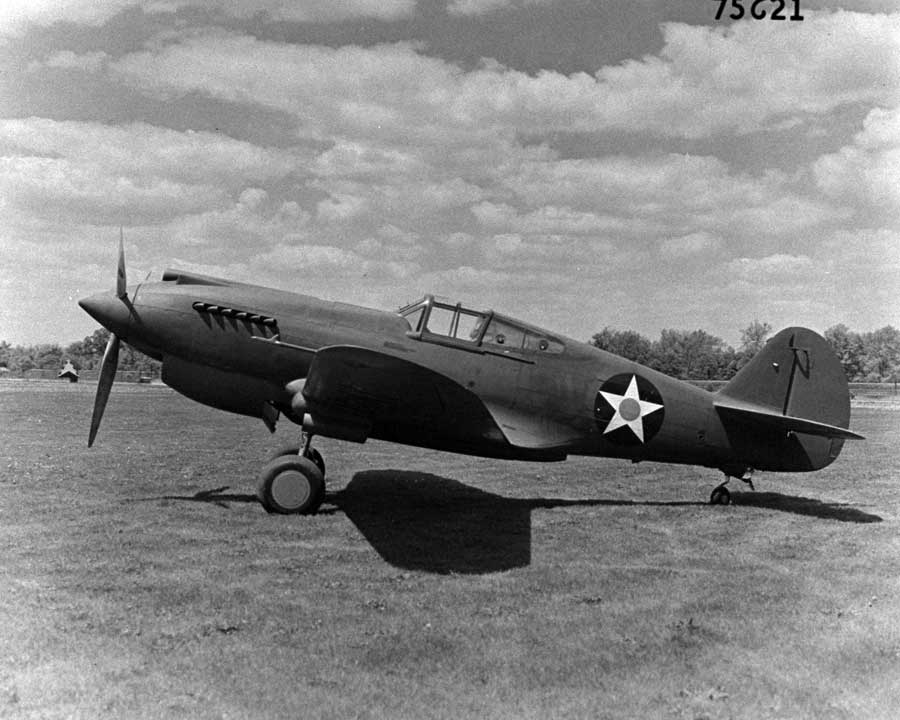
The Curtiss P-40 Warhawk was the principal American fighter in service when the United States entered World War II. Developed by Curtiss-Wright from the earlier P-36 and first flown in 1938, it traced its design lineage to the mid-1930s and was outclassed at high altitude by newer enemy fighters. Nonetheless, it was rugged, well armed, and effective at low and medium altitudes, where its diving speed and heavy firepower were assets.
The P-40 fought in nearly every theater and is best remembered for the shark-mouthed aircraft flown by the American Volunteer Group—the "Flying Tigers"—in China and Burma. It also served extensively with British, Soviet, Australian, and other Allied forces under names such as Tomahawk and Kittyhawk. About 13,738 were built, making it one of the most-produced American fighters of the war.
Specifications
- Manufacturer
- Curtiss
- Type
- Single-seat fighter
- Crew
- 1
- First Flight
- 1938
- Powerplant
- 1 × Allison V-1710 V-12, 1,150 hp (typical)
- Max Speed
- 360 mph
- Range
- 650 mi
- Service Ceiling
- 29,000 ft
- Length
- 31 ft 8 in
- Wingspan
- 37 ft 4 in
- Loaded Weight
- 8,800 lb (max)
- Armament
- 6 × .50 in machine guns; up to 2,000 lb of bombs