Hawker Siddeley Trident
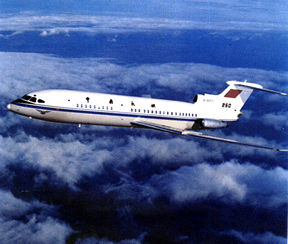
The Hawker Siddeley Trident was a British short- to medium-haul jet airliner that first emerged in the early 1960s. The first aircraft was rolled out on January 9 by Hawker Siddeley (originally developed under de Havilland), a three-engine design with engines clustered at the rear of the fuselage and a T-tail. In its early form it could carry around 88 passengers over distances on the order of 900 miles.
The Trident was designed specifically to meet the requirements of British European Airways for a short-haul aircraft capable of operating reliably in poor weather conditions. To that end it became a pioneer of automatic landing technology, among the first airliners cleared to perform blind, fully automatic landings in low-visibility conditions, an important capability for fog-prone European airports.
Because the aircraft was closely tailored to BEA's specifications, it ended up smaller and less versatile than competitors, and it was overshadowed commercially by the Boeing 727, which it broadly resembled. As a result the Trident sold in relatively modest numbers, though it gave reliable service with BEA and other operators, including a significant fleet in China, for many years.