Last Bendix Race Won by a B-58
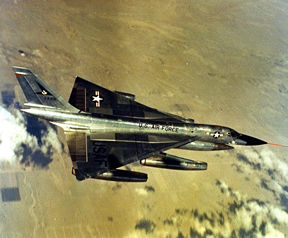
On March 5, 1962, a Convair B-58 Hustler set a transcontinental speed record in what proved to be the final running of the Bendix Trophy Race, bringing to a close one of the most celebrated traditions in American aviation history. The Bendix Trophy had been established in 1931 by Vincent Bendix, the aviation industrialist, as an annual cross-country air race that served as a barometer of American aeronautical progress — a competition that had seen propeller-driven racers give way to jets, and jets give way to supersonic aircraft capable of speeds that the original Bendix competitors could not have imagined.
Over nearly three decades the race had featured some of the most celebrated aircraft and pilots in American aviation, and its results had tracked the extraordinary acceleration of flight performance that compressed more technological change into thirty years than the preceding three millennia of human history combined. The B-58 Hustler that won the final race was itself a fitting endpoint — America's first operational supersonic bomber, capable of Mach 2, powered by four General Electric J79 afterburning turbojets, and representing the absolute pinnacle of what conventional jet aircraft design had achieved by the early 1960s.
The end of the Bendix Race reflected a deeper truth about where aviation had arrived by the early 1960s: the pursuit of speed had reached a plateau beyond which further advances required exotic materials, revolutionary propulsion concepts, and operational costs that placed the resulting aircraft beyond any practical competition format. The aircraft that defined the ceiling of that era — the Lockheed SR-71 Blackbird, which entered development in the early 1960s under Kelly Johnson's Skunk Works — flew at sustained speeds exceeding Mach 3.2, requiring a titanium airframe that glowed red-hot in flight and a fuel system that leaked on the ground because the aircraft's skin only sealed properly when thermally expanded at altitude.
The SR-71 still holds the world aircraft speed record — an official mark of 2,193 miles per hour set on July 28, 1976 — a record that has stood for nearly five decades and that no aircraft in production or development anywhere in the world appears likely to challenge in the foreseeable future. The Bendix Race ended because the aircraft that succeeded it were no longer racing machines but instruments of national power operating at the edges of physics, and the era of celebrating raw speed as a public spectacle gave way to the era of classifying it as a state secret.