 >
>The Triangle Shirt Fire
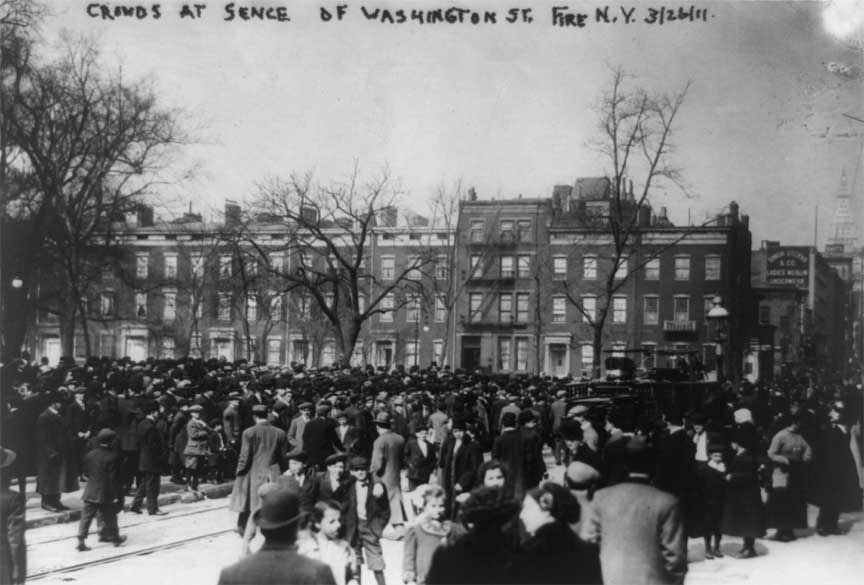
One hundred and forty-six young female and male employees of the Triangle Shirtwaist Company lost their lives in a tragic fire. The fire underscored the poor working conditions in garment factories. As a result of the fire, there were far greater inspections of saftey conditions in factories.
Here is an improved version:
At 4:40 PM on Saturday, March 25, 1911, as the workday was drawing to a close, a fire broke out in a scrap bin beneath one of the workers' tables on the eighth floor of the Triangle Shirtwaite Factory in New York City's Greenwich Village. The factory was a tinderbox — fabric scraps, tissue paper patterns, and barrels of machine oil were packed into every corner. The fire spread with terrifying speed.
The overwhelming majority of the 500 workers employed at the Triangle factory were young Jewish immigrant women, most of them teenagers and women in their twenties who had recently arrived from the shtetlach of Eastern Europe. They had come to America seeking a better life, and the garment trade was one of the few industries open to them. Many were the primary breadwinners for their families.
When the fire erupted, the exits proved fatally inadequate. One of the main doors had been locked by management to prevent theft — a common and illegal practice at the time. The main stairwells quickly became engulfed in flames. In an act of extraordinary courage, the elevator operator made trip after trip into the inferno, rescuing as many workers as he could before the shafts became inoperable. The building's single fire escape, overloaded with desperate workers, buckled and collapsed, sending those clinging to it plummeting to the alley below.
With no way out, dozens of young women crowded the windowsills. Onlookers on the street below watched in horror as they leaped, one after another, to their deaths. The firefighters who raced to the scene were powerless — their ladders reached only to the sixth floor, two stories below where workers were trapped, and their nets tore apart under the force of the falling bodies.
One hundred forty-six workers died that day: 123 women and 23 men. Many of the dead were identified only by the jewelry they wore, their faces and clothing burned beyond recognition. They were buried in a mass funeral procession that drew over 100,000 mourners through the streets of lower Manhattan — one of the largest public demonstrations of grief the city had ever seen. For New York's Jewish immigrant community, the tragedy was intimate and devastating; nearly every family on the Lower East Side had lost someone, or knew someone who had.
The factory's owners, Max Blanck and Isaac Harris — themselves Jewish immigrants who had built a profitable empire on the labor of their co-religionists — were charged with first and second-degree manslaughter for having locked the exit door. They were acquitted after their attorney successfully argued that they could not be proven to have known the door was locked at the time of the fire. The verdict provoked outrage across the city. The two men later collected $60,000 in insurance payments — roughly $400 per dead worker — and were twice more caught locking their workers inside their new factory.
The lasting consequence of the tragedy was legislative. The fire galvanized the New York state legislature to establish the Factory Investigating Commission, led by future Senator Robert Wagner and future Governor Al Smith. The Commission conducted sweeping hearings and factory inspections across the state, and its work produced 38 landmark laws reforming factory safety, working hours, and child labor in New York — legislation that became a national model and a foundation stone of the American labor movement. On October 14, 1911, just months after the disaster, the American Society of Safety Engineers was founded, a direct institutional response to the catastrophe on Greene Street.
The Triangle fire did not just change labor law. For the Jewish immigrant community, it crystallized a moral demand: that the dignity and safety of workers — however poor, however newly arrived, however female — was not negotiable. That conviction would animate the Jewish labor movement for generations to come.