The Treaty of Fort Laramie
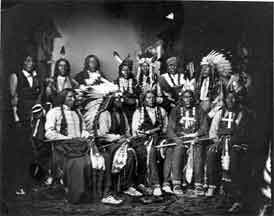
The treaties signed at Fort Laramie were among the most important—and most broken—agreements between the United States and the nations of the northern plains. The first, in 1851, sought to secure safe passage for emigrants along the overland trails by defining the territories of the Sioux, Cheyenne, Arapaho, and other nations and promising annuities in exchange. As the tide of settlement and the army's forts multiplied, that fragile peace collapsed into open warfare, including Red Cloud's War, in which the Lakota fought the United States to a standstill.
The second Treaty of Fort Laramie, in 1868, ended that war on terms remarkably favorable to the Lakota: the United States abandoned its forts on the Bozeman Trail and recognized the Great Sioux Reservation, including the sacred Black Hills, as Lakota land 'set apart for the absolute and undisturbed use and occupation' of the Sioux. The promise lasted only until 1874, when an expedition led by George Custer confirmed gold in the Black Hills. Prospectors poured in, the government tried to buy or seize the hills, and the broken treaty led directly to the war that culminated at the Little Bighorn.